
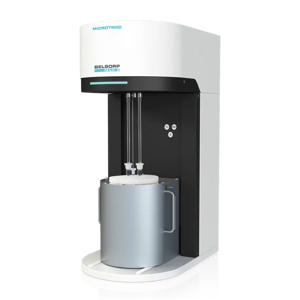
BELSORP MAX G Bet Specific Surface Area & Pore Size Analyzer
Manufacturer: Verder Scientific
SKU: BELSORP MAX G
Description
The BELSORP MAX G is a gas adsorption analyzer for the characterization of solid materials. Its primary function is to determine specific surface area and pore size distribution by measuring gas adsorption isotherms across a wide pressure range. This allows for the detailed analysis of microporous, mesoporous, and macroporous structures, as well as non-porous samples. The instrument features a dedicated measurement port, a separate port for saturated vapor pressure, and a distinct port for free space analysis, each with an individual high-precision pressure sensor to ensure data accuracy. It is compatible with numerous adsorbate gases, such as nitrogen, argon, krypton, carbon dioxide, hydrogen, oxygen, methane, and various other non-corrosive gases. Samples can be analyzed in powder, pellet, or molded form using appropriate sample tubes. Two configurations are available: a Low Pressure (LP) version and a Medium Pressure (MP) version, each fitted with pressure transducers optimized for their respective operational ranges. This analyzer is utilized in diverse sectors including pharmaceutical development, catalyst research, ceramics, polymer science, and battery material analysis for both fundamental research and quality control purposes.
Specifications
| Item | BELSORP MAX G Bet Specific Surface Area & Pore Size Analyzer |
| Company | Verder Scientific |
| Catalog Number | BELSORP MAX G |
| Quantity | EA |
| Applications | Cosmetic creams, lotions, dairy products, beverages, flavor emulsions, pharmaceutical parenteral, topical forms, metalworking fluids, agrochemical, fertilizers, pesticides, petroleum emulsion, paints, inks, coatings, drug, vaccine suspension, make-up, sunscreen, chemical industry, polymer industry, ceramics, catalysts, battery slurries, electronic slurries, drug delivery system, lnp, liposomes, research on nanoparticles, nanoparticle suspension, polymer dispersion, biopolymer dispersion |
| Gases | N2, Ar, Kr, CO2, H2, O2, CH4, NH3, NO, CO, butane, and various other (non-)corrosive gases |
Vendors & Pricing
No vendors listed yet
Vendor pricing will appear here once available.